HOW MIGHT WE BRING PLAYFUL LEARNING WITH TECHNOLOGY TO CHILDREN IN CRISIS SETTINGS?
In 2021, the LEGO Foundation wanted to shape a new portfolio, Playful Learning in Crisis Settings (PLiCS), to bring play-based learning to children affected by displacement and conflict across Ethiopia, Uganda, and Tanzania. They asked, how might we identify the most promising creative solutions around multimedi and technologyalready working in the region, and use that evidence to guide new investment?
THE BIG IDEA
Let's map the problem space, learn from what's already working across East Africa, and build a set of principles the LEGO Foundation can use to invest wisely in creative, play-based solutions that leverage technology for children out of school.
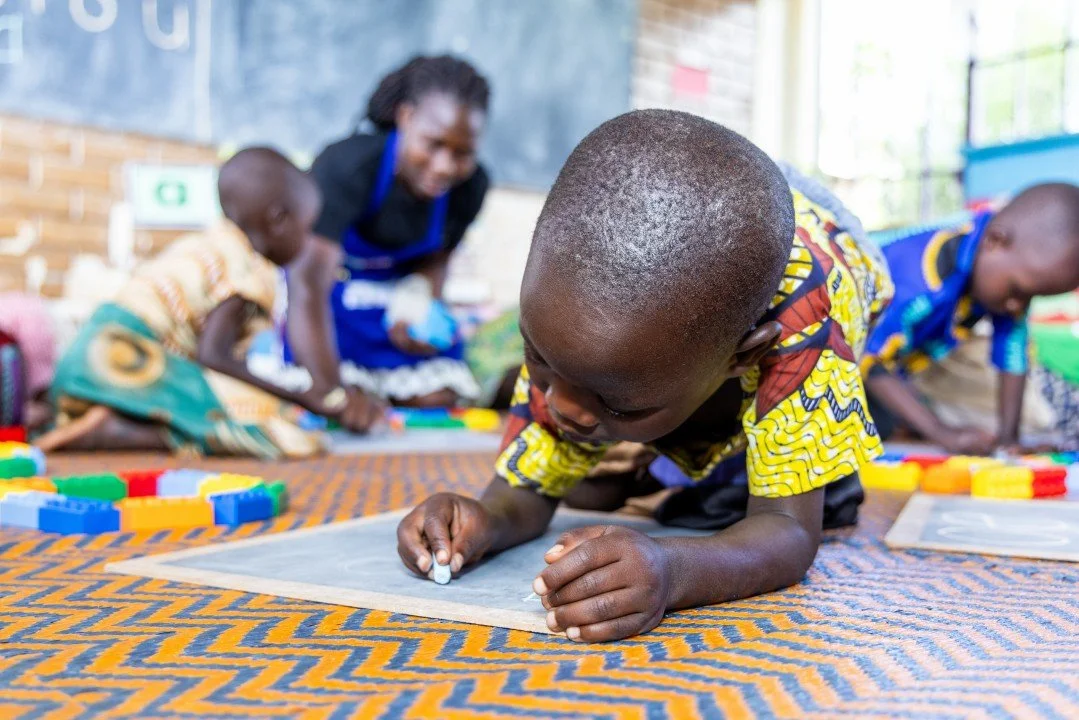
PHOTO COURTESY OF THE IRC.
OUR DESIGN APPROACH
We began with an extensive literature review of more than 80 scholarly and field resources on barriers to access and quality education for children in crisis settings, followed by interviews with creative-solutions providers and experts across the humanitarian education sector. From this research, we identified the core barriers keeping children out of school, from inclusive education policy gaps to the exclusion of girls and children with disabilities, and the barriers to quality learning for children already in school, like overcrowded classrooms and language of instruction.
We then developed seven guiding principles for creative solutions, and five additional principles specific to multimedia and low-tech approaches, co-designing with communities in crisis and prioritizing playful learning chief among them. To bring these principles to life, we profiled a set of promising organizations already implementing play-based solutions across the region, from Right To Play's work with Tanzania's Ministry of Education to Can't Wait to Learn's participatory, child-led approach to game design, and synthesized the common gaps and opportunities across their work.
TA-DA! THE OUTCOME
We delivered a comprehensive framework and set of actionable recommendations that helped the LEGO Foundation shape investments in creative, play-based multimedia and technology solutions for children with disabilities and other traditionally excluded learners, and a roadmap for how to boost the reach and quality of existing solutions already transforming access to education across Ethiopia, Uganda, and Tanzania.